
Categories: AI Video Workflow, Creator Strategy, Production Process
Tags: happy horse, ai video workflow, content strategy, creator toolkit
Introduction
This guide explores the Google Veo 3 API, offering a practical framework for integrating AI video generation into your Happy Horse production workflow. The focus is on leveraging the API for clearer planning, faster execution, and consistent publishing.
Core Content Blocks
1) What Is the Veo 3 API?
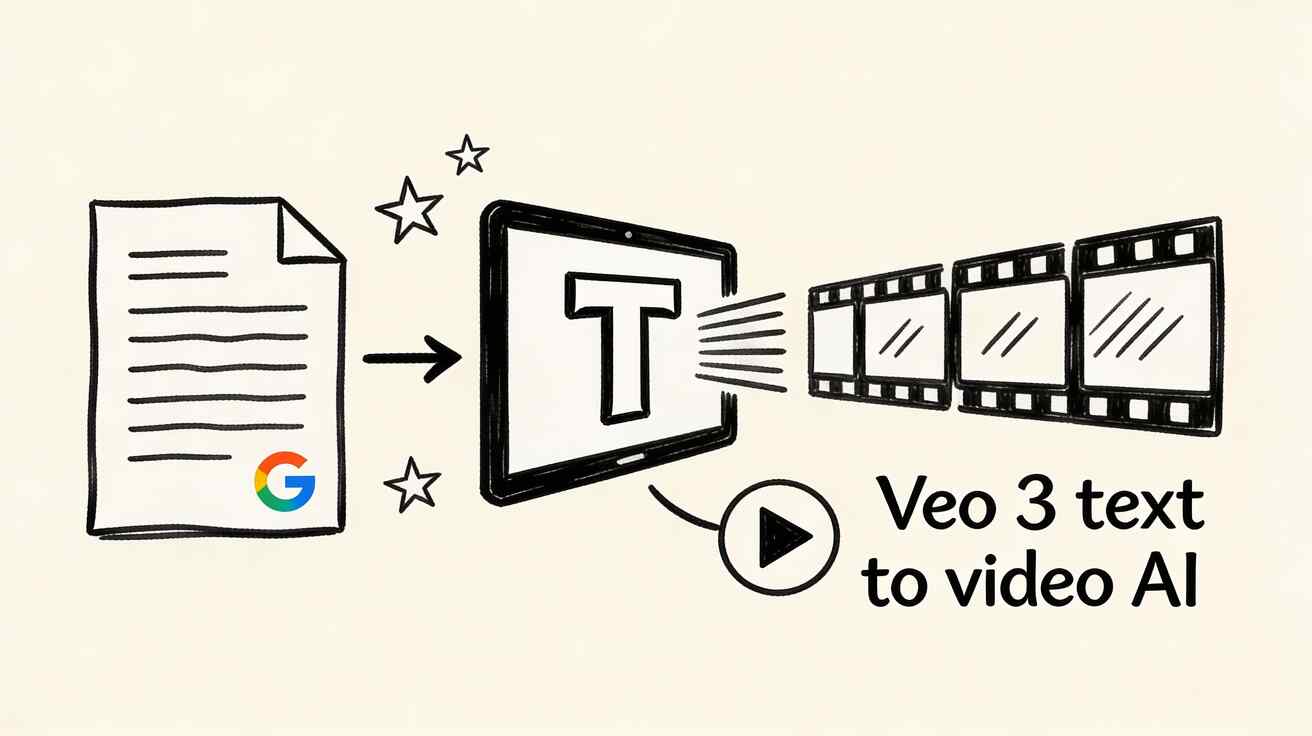
The Veo 3 API, accessible via Google Cloud's Vertex AI platform, enables developers to programmatically generate videos. By sending text prompts and optional reference images to Google's servers, users receive generated video files. This capability is central to automating and scaling video content creation.
Happy Horse execution path:
- Build your first version in Text to Video or Image to Video
- Refine motion/style with Video to Video
- Add sound layers via Video to Audio when needed
- Publish one clean variant and one experiment, then compare performance

2) Prerequisites
For production environments, the recommended authentication method for the Veo 3 API is a service account. This ensures secure and scalable access to Google Cloud resources.
Happy Horse execution path:
- Build your first version in Text to Video or Image to Video
- Refine motion/style with Video to Video
- Add sound layers via Video to Audio when needed
- Publish one clean variant and one experiment, then compare performance
3) Making Your First API Request
The Google Cloud Python SDK is the recommended tool for interacting with the Veo 3 API. For other programming languages, direct use of the REST API is an alternative.
Happy Horse execution path:
- Build your first version in Text to Video or Image to Video
- Refine motion/style with Video to Video
- Add sound layers via Video to Audio when needed
- Publish one clean variant and one experiment, then compare performance
4) Handling Asynchronous Operations
Veo 3 video generation is an asynchronous process. This means you submit a request and then poll for its completion. Implementing a robust polling mechanism is crucial for managing these operations effectively.
Happy Horse execution path:
- Build your first version in Text to Video or Image to Video
- Refine motion/style with Video to Video
- Add sound layers via Video to Audio when needed
- Publish one clean variant and one experiment, then compare performance
5) Downloading Generated Videos
Once videos are generated, they are stored in Google Cloud Storage. You can programmatically download these files to integrate them into your applications or workflows.
Happy Horse execution path:
- Build your first version in Text to Video or Image to Video
- Refine motion/style with Video to Video
- Add sound layers via Video to Audio when needed
- Publish one clean variant and one experiment, then compare performance
6) Batch Processing and Quota Management
For elevated processing needs, you can submit a quota increase request through the Google Cloud Console. This is essential for handling large volumes of video generation, such as a batch of 100 eight-second 1080p clips, which can cost approximately $400. Understanding and managing these quotas is key to efficient operation.
Happy Horse execution path:
- Build your first version in Text to Video or Image to Video
- Refine motion/style with Video to Video
- Add sound layers via Video to Audio when needed
- Publish one clean variant and one experiment, then compare performance
7) Cost Estimation and Production Best Practices
Veo 3 API pricing is based on the number of video seconds generated. To manage costs effectively, especially during development and testing, use 720p resolution and switch to 1080p only for final production output. The quality of your prompts directly impacts the quality of the generated video, so invest in refining your prompt engineering. For alternative solutions concerning cost, access, or commercial rights, consider APIs like Seedance.
Happy Horse execution path:
- Build your first version in Text to Video or Image to Video
- Refine motion/style with Video to Video
- Add sound layers via Video to Audio when needed
- Publish one clean variant and one experiment, then compare performance
Practical Weekly Workflow
- Define Objectives: Choose 2 to 3 core blocks from this guide and set a weekly objective for your video generation.
- Initial Drafts: Produce your first video drafts using Text to Video and Image to Video.
- Refinement: Improve the structure and style of your videos with Video to Video.
- Audio Integration: Add necessary audio layers using Video to Audio or Text to Music.
- Publish and Analyze: Publish your videos and rigorously compare the performance of different variants to identify clear winners.
Conclusion
Standardizing your content production process is the most reliable way to scale output. By maintaining a stable structure, iterating on specific sections, and scaling only what demonstrates proven performance, you can optimize your AI video generation workflow.
Call to Action
- Start with Image to Video: https://openhappyhorse.io/image-to-video
- Start with Text to Video: https://openhappyhorse.io/text-to-video
- Refine with Video to Video: https://openhappyhorse.io/video-to-video
- Add audio with Video to Audio: https://openhappyhorse.io/video-to-audio
- Build supporting visuals: https://openhappyhorse.io/text-to-image
FAQs
1) Can this workflow work for a solo creator? Yes. Start with a small weekly scope and reuse the same production blocks to maintain consistency and efficiency.
2) How many variants should I test per post? Testing 2 to 4 focused variants is typically sufficient to identify clear winners and optimize your content strategy.
3) Should I prioritize trends or consistency? Leverage trends for immediate reach, but always maintain a consistent format system for long-term brand recognition and audience memory.