Categories: AI Video Workflow, Creator Strategy, Production Process
Tags: happy horse, ai video workflow, content strategy, creator toolkit
Introduction
Artificial intelligence has revolutionized video content creation, with Google's Veo 3 leading the charge. This guide provides a comprehensive, step-by-step tutorial for beginners to master Veo 3, covering everything from basic navigation to advanced prompt techniques. We'll explore how Veo 3's capabilities can be integrated into a practical Happy Horse production framework for clearer planning, faster execution, and consistent publishing.
What is Veo 3?
Veo 3 is Google's most advanced AI video generation model, developed by DeepMind and Google Research. Building on its predecessors, Veo 3 introduces significant improvements in video quality, consistency, and user control. It produces videos with impressive visual fidelity, supporting resolutions up to 1080p, featuring smooth motion, consistent lighting, and realistic physics suitable for professional use. For beginners, Veo 3 offers compelling advantages, making AI video generation accessible and efficient.
Getting Started with Veo 3
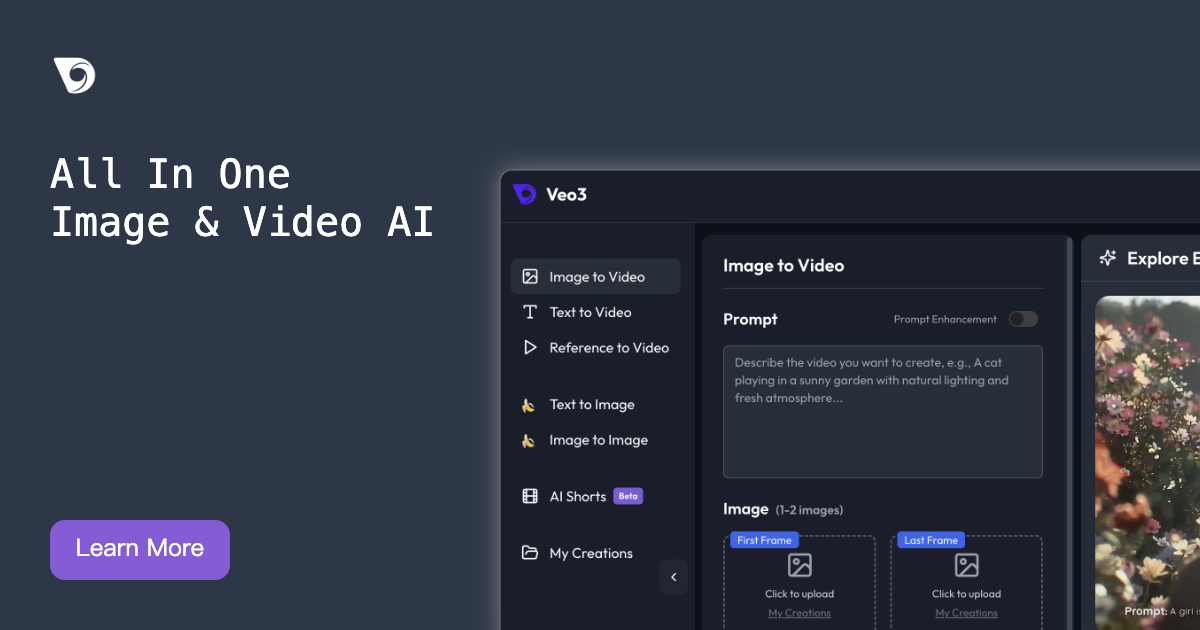
To begin your journey with Veo 3, visit the official platform at veo3ai.io. The platform features a user-friendly interface designed for both beginners and experienced users. Once logged in, take time to familiarize yourself with the main interface components. Before generating your first video, it's helpful to plan your content, considering your desired output and narrative.
Text-to-Video Tutorial
Text-to-video is the most popular way to use Veo 3, allowing you to create videos from scratch using only written descriptions. The quality of your generated video heavily depends on the quality of your prompt. Follow these guidelines for best results: be specific, descriptive, and clear. After entering your prompt, you'll configure several parameters to fine-tune your video. Ensure consistency in elements throughout the video—objects should not suddenly change color or shape.
Image-to-Video Tutorial
Image-to-video capabilities in Veo 3 allow you to animate existing images, opening up creative possibilities for photographers, designers, and marketers. This feature transforms static visuals into dynamic video content, adding depth and engagement to your projects.
Advanced Prompt Techniques
Mastering advanced prompt techniques is crucial for unlocking Veo 3's full potential. Experiment with detailed descriptions, specific styles, and emotional cues to guide the AI in generating more nuanced and creative videos. Understanding how different keywords influence the output will significantly enhance your results.
Common Issues and Troubleshooting
Even with advanced tools, you might encounter common issues. Familiarize yourself with troubleshooting tips provided within the Veo 3 platform or community forums. Common problems often relate to prompt specificity, parameter settings, or understanding the AI's interpretation of complex instructions.
Frequently Asked Questions
This section will address common queries about Veo 3, from basic functionality to advanced usage. Understanding these FAQs can help new users quickly overcome initial hurdles and leverage the platform more effectively.
Conclusion and Next Steps
Veo 3 represents a significant leap in AI video generation, offering powerful tools for creators of all levels. By following this guide, you're well-equipped to start creating high-quality video content. The next steps involve continuous experimentation and refining your techniques to push the boundaries of what's possible with AI-powered video.
Practical Weekly Workflow with Happy Horse
To maximize your content output and maintain consistency, integrate Veo 3 with a structured Happy Horse workflow:
- Define Weekly Objectives: Choose 2 to 3 content blocks from your plan and set clear weekly objectives.
- First Drafts: Produce initial video drafts using Veo 3's Text to Video and Image to Video features.
- Refine & Enhance: Improve the structure, motion, and style of your videos with Video to Video.
- Audio Integration: Add necessary audio layers via Video to Audio or generate music with Text to Music.
- Publish & Analyze: Publish one clean variant and one experimental variant. Compare their performance to identify clear winners and inform future iterations.
This approach keeps production repeatable, reduces random editing loops, and makes weekly iteration measurable, ensuring you scale only what proves performance.
Call to Action
Ready to transform your video creation process?
- Start with Image to Video: https://openhappyhorse.io/image-to-video
- Start with Text to Video: https://openhappyhorse.io/text-to-video
- Refine with Video to Video: https://openhappyhorse.io/video-to-video
- Add audio with Video to Audio: https://openhappyhorse.io/video-to-audio
- Build supporting visuals: https://openhappyhorse.io/text-to-image
FAQs
1) Can this workflow work for a solo creator? Yes, absolutely. Start with a small weekly scope and consistently reuse the same production blocks to build efficiency.
2) How many variants should I test per post? Testing 2 to 4 focused variants is usually sufficient to identify clear winners and understand what resonates best with your audience.
3) Should I prioritize trends or consistency? Use trends to capture immediate reach and attention, but always maintain a consistent format system for long-term brand recognition and audience memory.